
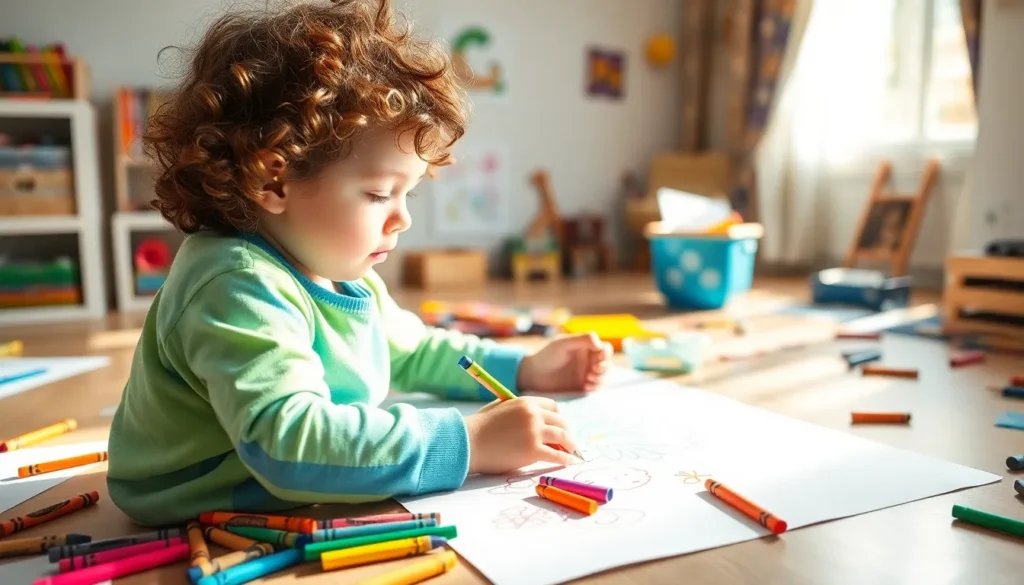
Drawing is more than just a fun activity for preschoolers; it’s a vital part of their development. As little hands grasp crayons and markers, they’re not only expressing their creativity but also honing essential motor skills. Each stroke on paper helps them explore their imagination and communicate their thoughts in a visual language.
In the world of preschool drawing, every scribble holds meaning. These early artistic endeavors lay the groundwork for cognitive growth and emotional expression. Understanding the significance of drawing at this stage can help parents and educators nurture a child’s creative journey, fostering a love for art that lasts a lifetime.
Understanding Preschool Drawing
Preschool drawing plays a crucial role in early childhood development. It nurtures various skills that lay the foundation for future learning and creativity.
Importance of Drawing in Early Childhood
Drawing during early childhood fosters fine motor skills. It enhances hand-eye coordination through activities like gripping crayons or markers. Drawing also encourages self-expression, allowing children to convey thoughts and feelings visually. Additionally, it aids in cognitive development by promoting problem-solving and critical thinking. Engaging in art activities boosts confidence as children create unique pieces of work. Recognizing the importance of drawing supports holistic development in young children.
Stages of Drawing Development
Drawing development in preschoolers occurs in distinct stages:
- Scribbling Stage
- Occurs around 15 months to 3 years.
- Children create random marks, developing control over writing tools.
- Pre-Schematic Stage
- Aged approximately 3 to 4 years.
- Children begin recognizing shapes and forming basic representations of objects.
- Schematic Stage
- Typically experienced between 4 to 7 years.
- Children create more detailed drawings, including recognizable features and perspectives.
- Gang Stage
- Generally around 6 to 9 years.
- Children exhibit advanced skills and start incorporating human figures with bodily proportions.
Understanding these stages helps parents and educators support children’s artistic efforts effectively.
Techniques for Encouraging Preschool Drawing
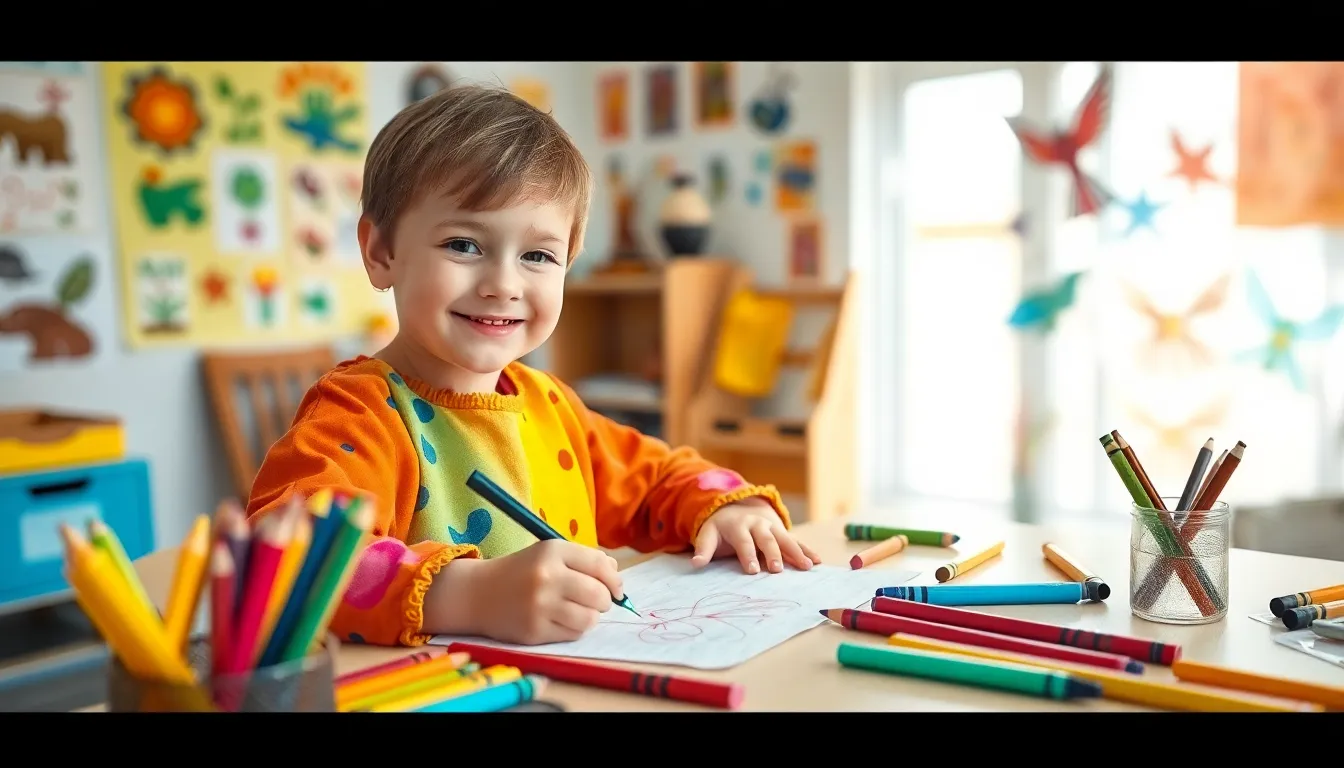
Effective techniques significantly enhance preschool drawing experiences, fostering creativity and development in young children.
Tools and Materials
Selecting appropriate tools and materials plays a crucial role in encouraging preschool drawing. Consider these options:
- Crayons: Soft, vibrant colors attract children’s attention and allow for easy grip.
- Markers: Washable markers offer bold colors and help develop fine motor skills.
- Colored pencils: These encourage precision and control while introducing shading techniques.
- Paper variety: Utilizing different textures, sizes, and colors sparks imagination and experimentation.
- Drawing boards: Magnetic or framed boards provide reusable surfaces, reducing waste and increasing practice opportunities.
Incorporating diverse tools and materials promotes engagement and helps preschoolers explore various artistic techniques.
Creating a Conducive Environment
A welcoming environment enhances the drawing process significantly. Consider these elements:
- Designated art area: Establish a specific space for drawing equipped with all necessary materials, promoting focus and creativity.
- Accessible supplies: Position tools within reach for independent exploration, empowering children to initiate drawing activities.
- Positive reinforcement: Celebrate each child’s artwork, fostering confidence and motivation through encouragement and praise.
- Inspiration sources: Display artwork from various cultures and styles to introduce diversity in techniques and themes.
- Natural lighting: Utilize natural light to create an inviting atmosphere, encouraging longer periods of engagement in drawing activities.
Creating a conducive environment sets the stage for inspiring creativity and nurturing a lifelong love for art through preschool drawing.
Benefits of Preschool Drawing
Preschool drawing plays a pivotal role in early childhood development, offering numerous benefits that support various aspects of growth.
Cognitive Development
Cognitive development in preschoolers thrives through drawing activities. Drawing enhances problem-solving abilities as children navigate spatial relationships and explore concepts of shape and proportion. It promotes critical thinking as they make decisions about colors, forms, and layouts. Engaging in these tasks strengthens memory and cognitive processing skills. Research shows that children who regularly participate in drawing exhibit greater creativity and improved communication skills compared to those who do not.
Emotional Expression
Emotional expression flourishes when preschoolers engage in drawing. Art provides a unique outlet for feelings, allowing children to express themselves in ways they might struggle to articulate. Colors and forms enable them to convey moods and sentiments, fostering emotional intelligence. This self-expression can lead to increased self-esteem, as children take pride in their creations. Additionally, sharing their artwork with peers and adults reinforces social connections and enhances interpersonal skills. Drawing serves as a therapeutic tool, helping children process experiences and emotions in a constructive manner.
Common Challenges in Preschool Drawing
Preschoolers face several challenges in their drawing journey that can hinder their artistic expression. Addressing these challenges can foster a more positive drawing experience and stimulate their development.
Fear of Judgment
Fear of judgment can significantly impact a child’s willingness to draw. Preschoolers, often sensitive to feedback, may worry about how their creations are perceived by peers and adults. This apprehension can lead to reluctance in sharing their artwork, stifling their creative expression. Encouraging a non-critical environment where all art is celebrated helps children feel secure and free to explore their creativity. Parents and educators can promote this atmosphere by praising effort over results, reinforcing that every creation is meaningful.
Limited Motor Skills
Limited motor skills present a common challenge for preschoolers. At this age, fine motor abilities are still developing, making it difficult for children to manipulate drawing tools effectively. Gripping crayons or markers might pose challenges, resulting in frustration during drawing activities. Providing age-appropriate tools, such as thicker crayons or large markers, can ease this struggle. Engaging children in activities that enhance fine motor skills, like squeezing, cutting, or pasting, prior to drawing can also improve their control and confidence. Addressing these motor skill limitations promotes a more enjoyable and successful drawing experience.
Recognizing the significance of preschool drawing can transform a child’s developmental journey. By embracing this creative outlet, parents and educators can nurture essential skills while fostering emotional intelligence. Each drawing session opens doors to exploration and self-expression, allowing children to communicate their thoughts and feelings.
Creating a supportive environment encourages children to experiment without fear of judgment. This not only builds confidence but also strengthens their artistic abilities. As they progress through various stages of drawing development, the benefits extend far beyond the canvas. Ultimately, encouraging preschool drawing cultivates a lifelong appreciation for art and creativity, enriching children’s lives in countless ways.


