
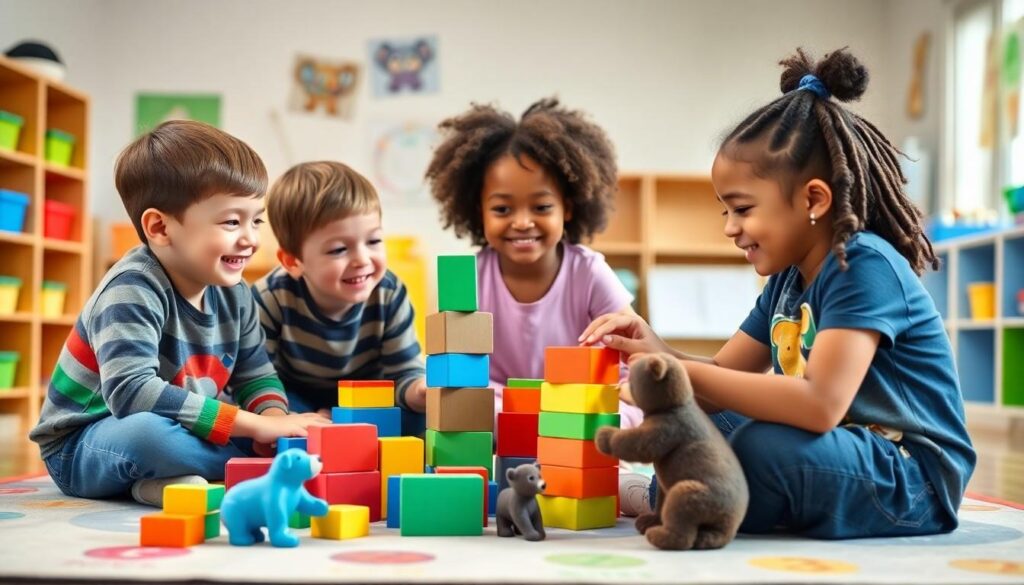
Counting isn’t just for accountants and math whizzes; it’s the secret sauce to unlocking a world of learning for preschoolers. Imagine a room full of tiny hands eagerly raising fingers, each one a stepping stone toward mastering numbers. With counting math activities, kids dive into a universe where numbers come alive, and learning feels like playtime.
Importance Of Counting Math Activities For Preschoolers
Counting activities play a crucial role in early childhood education by laying a strong foundation for mathematical understanding. Young children develop essential skills through interactive counting experiences that promote their cognitive growth. Engaging preschoolers in these activities encourages them to recognize patterns, increase their number sense, and enhance problem-solving abilities.
These math activities support social development as children often work in groups or pairs. Collaborative counting games teach sharing, taking turns, and cooperative play, which fosters communication skills. Interaction with peers also boosts confidence when expressing numerical ideas or strategies.
Moreover, counting activities help link abstract concepts to real-world experiences. For instance, using everyday objects like blocks or fruits allows preschoolers to visualize numbers and relate them to tangible items. Such hands-on learning reinforces understanding and retention of counting principles.
Additionally, counting activities stimulate critical thinking by challenging children to explore various methods for solving counting problems. Games that involve counting aloud or moving objects assist in reinforcing one-to-one correspondence, which is foundational for more advanced math concepts. Observation suggests that repeated participation in counting exercises strengthens memorization of numerical sequences.
Furthermore, these activities often incorporate fun and creativity, making learning appealing. Songs, dances, and interactive storytelling can turn counting into an enjoyable experience, further encouraging preschoolers to engage with math positively. Emphasizing enjoyment in learning helps cultivate a lifelong appreciation for mathematics.
Overall, the significance of counting math activities extends beyond numerical skills, integrating cognitive, social, and emotional development. Investing time in these activities proves essential for preschoolers, promoting a comprehensive understanding of mathematics in a stimulating environment.
Types Of Counting Math Activities

Counting math activities come in various forms, adding excitement to preschool learning. These activities engage children with numbers, fostering both cognitive and social skills.
Interactive Games
Interactive games create an engaging environment for preschoolers. Activities like counting races involve children racing to collect items while counting aloud. Board games can incorporate dice, encouraging kids to count moves as they play. Additionally, online counting games provide digital interaction, reinforcing number recognition. All of these options encourage collaboration among peers, enhancing communication and teamwork skills.
Hands-On Activities
Hands-on activities make counting tangible for young learners. For instance, using colorful blocks helps children visualize quantities. Sorting objects like buttons or fruits allows them to group items while counting. Art projects, such as creating counting crafts, provide creativity alongside numerical skills. These activities deepen comprehension by linking counting to everyday experiences, making learning memorable.
Benefits Of Counting Math Activities
Counting math activities offer numerous advantages for preschoolers, significantly enhancing their early learning experiences. By engaging in these activities, children develop essential skills that support their growth.
Cognitive Development
Cognitive development flourishes through counting math activities. Engaging in these exercises promotes critical thinking and problem-solving abilities. Children learn to recognize patterns and relationships between numbers while practicing sequential counting. Moreover, they strengthen their memory by recalling numerical sequences and basic math facts. Experiencing hands-on activities, like counting objects, solidifies their understanding of quantity. Overall, these activities lay a robust foundation for future mathematical learning.
Social Skills Enhancement
Social skills enhancement occurs during collaborative counting math activities. Playing games that involve taking turns or sharing materials cultivates teamwork and communication abilities. Children interact with peers, practicing essential social behaviors like patience and cooperation. Engaging in group activities helps them develop empathy and learn to navigate social scenarios effectively. Experiencing shared successes in counting games fosters relationship-building and boosts self-confidence. Thus, counting activities contribute not only to mathematical understanding but also to valuable interpersonal skills.
Tips For Implementing Counting Math Activities
Implementing effective counting math activities requires thoughtful planning. Engaging preschoolers hinges on utilizing captivating resources.
Engaging Materials
Utilizing colorful counting tools enhances interest in numerical concepts. Items such as counting bears, beads, and buttons stimulate tactile interaction. Mixing various materials encourages exploration and experimentation. Books featuring numbers and counting themes foster literacy while reinforcing number recognition. Incorporating everyday objects like fruits and toys links counting to real-world applications. Using flashcards with images not only makes learning visual but also aids memory retention.
Creating A Fun Learning Environment
Creating an appealing learning atmosphere sets the stage for enthusiastic participation. Setting up designated counting corners within the classroom invites discovery. Incorporating music and rhythm during counting activities engages auditory learners. Rotating games keeps the experience fresh and exciting. Hosting group challenges fosters teamwork and healthy competition, strengthening social skills. Allowing freedom in play empowers children to express themselves while enhancing creativity in learning.
Conclusion
Counting math activities are vital for preschoolers as they build a strong foundation for mathematical understanding. By making learning enjoyable and interactive, these activities not only enhance cognitive skills but also foster social development. Engaging with numbers through play encourages collaboration and communication among peers.
Incorporating various tools and resources can further enrich these experiences. From colorful counting objects to themed books, the possibilities are endless. Creating a dynamic learning environment keeps children excited and motivated. Ultimately, counting activities equip preschoolers with essential skills that extend beyond math, nurturing their overall growth and development in a fun and engaging way.


