
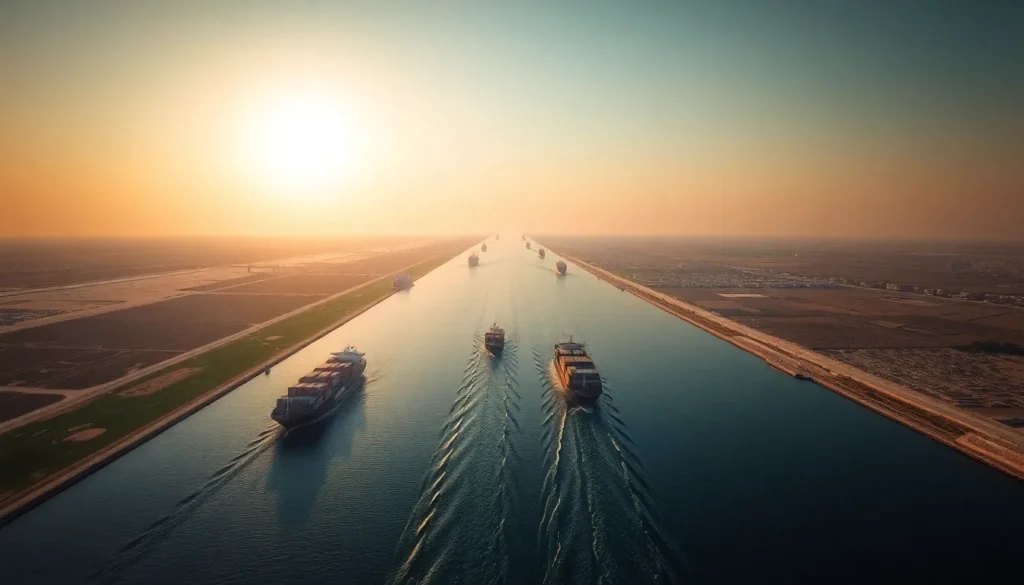
The Suez Canal isn’t just a shortcut for ships; it’s a marvel of engineering that cuts through the heart of Egypt, saving vessels from the long trek around Africa. Spanning a remarkable length, this waterway has become the lifeline of global trade. Imagine sailing through a narrow corridor, dodging cargo ships and the occasional confused pelican—now that’s a journey worth taking!
Overview of the Suez Canal
The Suez Canal spans approximately 120 miles, serving as a crucial connector between the Mediterranean Sea and the Red Sea. This remarkable engineering feat enables ships to save significant travel time compared to the longer route around the African continent. Established in 1869, it has transformed maritime trade by offering a more efficient passage for vessels carrying cargo.
Navigating through the Suez Canal involves specific procedures and regulations, ensuring safety and efficiency. Various types of ships traverse this vital waterway, including container ships, bulk carriers, and tankers. Each vessel plays a critical role in the global economy by transporting goods between major trade routes.
The canal supports about 10% of global trade, highlighting its importance in international commerce. On average, around 50 ships pass through daily, making it one of the busiest waterways in the world. Seasonal variations affect traffic flow, with peak periods occurring during specific months.
Maintaining the Suez Canal requires constant attention and upkeep. The Suez Canal Authority oversees operations, ensuring smooth navigation and efficient management of resources. Investments in modernization and expansion projects aim to accommodate larger vessels and increase capacity, further enhancing the canal’s role in global logistics.
Understanding the Suez Canal’s length, operational protocols, and economic impact reveals its significance in maritime history. Whether for trading routes or geopolitical strategies, the canal continues to shape maritime policies and practices across the globe.
Historical Development
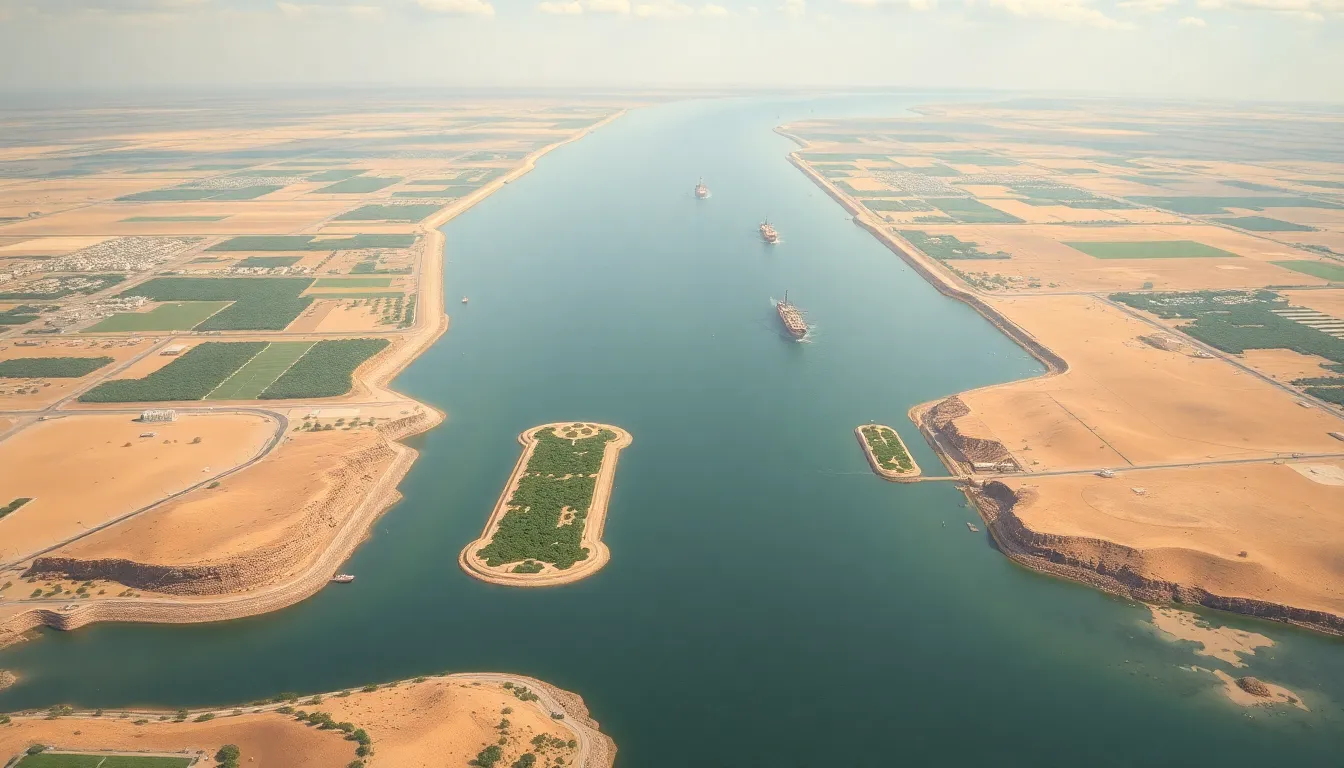
The Suez Canal has a rich history marked by various construction milestones and expansions. This engineering feat has dramatically influenced maritime trade since its inception.
Construction Timeline
Ferdinand de Lesseps spearheaded the construction of the Suez Canal, starting in 1859. The project involved around 1.5 million workers, many of whom faced significant challenges. For ten years, they labored tirelessly, and the canal opened to navigation on February 17, 1867. Officially inaugurated on February 15, 1869, the waterway offered a shortcut between Europe and Asia, drastically changing global commerce.
Major Expansions
Notably, the canal underwent significant expansions beginning in the 20th century. A major expansion occurred in 1956, allowing larger vessels to transit more efficiently. In 2015, an ambitious expansion project added a new channel, increasing capacity and improving traffic flow. These enhancements now facilitate the passage of about 50 ships daily, reflecting its vital role in global trade and maritime logistics.
Current Length of the Suez Canal
The Suez Canal stretches approximately 120 miles. This impressive length connects the Mediterranean Sea to the Red Sea, significantly impacting maritime trade.
Length in Miles
120 miles defines the exact length of the Suez Canal, making it one of the longest artificial waterways. Multiple vessels traverse this stretch daily, showcasing its importance for global shipping. The waterway eliminates the lengthy detour around Africa, saving ships valuable time and fuel. For instance, routes through the canal can reduce travel distances by over 7,000 kilometers. Such efficiency translates directly into economic benefits for shipping companies and world trade.
Comparison with Other Important Canals
Comparisons highlight the Suez Canal’s significance among other major canals worldwide. The Panama Canal, measuring about 50 miles, is much shorter, primarily serving the Americas. Meanwhile, the Kiel Canal in Germany spans around 60 miles, primarily benefiting Northern European maritime traffic. These lengths underscore the Suez Canal’s position as a critical link between Europe and Asia. Each canal plays a unique role in global logistics, but none match the Suez Canal’s impact on international shipping volumes.
Economic Importance
The Suez Canal plays a vital role in global trade dynamics. Its strategic location facilitates efficient shipping routes, significantly impacting international commerce.
Trade Routes and Shipping
Multiple trade routes converge at this critical junction, making it an indispensable artery for shipping. Over 50 vessels navigate the canal daily, linking Europe and Asia. Ships save considerable time and fuel, as the canal reduces travel distances by over 7,000 kilometers compared to the route around Africa. Container ships, tankers, and bulk carriers utilize this route, showcasing the canal’s versatility in accommodating various cargo types. The Suez Canal’s unique length of approximately 120 miles enhances its ability to support global shipping demands effectively.
Impact on Global Economy
Significant economic contributions stem from the Suez Canal’s efficient operations. Approximately 10% of global trade passes through this waterway, underscoring its importance in the world economy. The canal enables faster delivery times, positively influencing supply chain efficiency. Enhanced connectivity allows countries to engage in international trade more effectively, promoting economic growth. Furthermore, the canal’s extensive operations create jobs and stimulate local economies, reflecting its overarching impact on both regional and global levels.
Future Prospects
Ongoing developments aim to enhance the Suez Canal’s efficiency and capacity. Proposed changes focus on expanding shipping lanes and deepening sections of the canal. These improvements support larger vessels and accommodate growing global trade demands.
Proposed Changes
Future expansions may include widening key channels to ensure safe navigation for larger ships. Investments in advanced technology promise improved traffic management and monitoring systems. Upgrades to infrastructure will facilitate faster transit times, benefiting shipping companies and global commerce. Scheduling changes for pilots could further streamline operations, decreasing wait times at entry points. Overall, these proposed changes enhance the canal’s operational capacity and solidify its position in the maritime sector.
Environmental Considerations
Environmental challenges play a critical role in the Suez Canal’s future. Dredging and expansion activities risk disrupting local ecosystems, making ecological assessments essential. Strategies that promote sustainable practices aim to mitigate the canal’s ecological footprint. Collaboration with environmental organizations ensures continuous monitoring of marine life and habitats. Implementing greener technologies for vessel operations also supports long-term environmental goals. Prioritizing these considerations will foster a healthy balance between economic growth and ecological preservation.
The Suez Canal’s impressive length of 120 miles underscores its vital role in global trade. By offering a more efficient route between the Mediterranean and Red Seas, it significantly reduces travel distances for vessels, enhancing the speed and efficiency of maritime logistics. As it continues to evolve with expansions and technological advancements, the canal remains a cornerstone of international commerce. Its ability to accommodate diverse shipping needs and foster economic growth highlights the importance of this waterway in connecting markets worldwide. The Suez Canal’s legacy will undoubtedly endure as it adapts to the changing landscape of global trade.


